 [click image]
.
Do you doubt it?
.
love, 99
.
 [click image]
 [click image]
 [click image]
 [click image]
Gerald Celente, 21 minutes....
Give Us All Your Money....
No, really, all of it....
Would that it would stay a mere currency war....
Lining up to save their homes....
Forty three million people on food stamps....
Pakistan finally provoked into defending its people....
Helpless Democratic-Fascists clean your clock....
And the not-so-helpless ones....
Bailing, bailing, bailing....
No, really, and indeed it's shocking....
Your moment of supreme levity... savor it....
Buck up!
White House press secretary Robert Gibbs said Thursday that Obama is sending a newly passed bill back to Congress to be fixed because the current version has "unintended consequences on consumer protections." The bill would loosen the process for providing a notary's seal to documents and allow them to be done electronically.Anybody had the mental space yet to consider how DIZZYINGLY fast this bill got spit out of the legislature and into the White House? DO YOU THINK THE CREEP IN THE OVAL OFFICE WILL DO ANYTHING BEYOND MAKING IT LOOK AS THOUGH, OH, NOW THE BANKS HAVE IT RIGHT?
Obama will not sign a bill that would allow foreclosure and other documents to be accepted among multiple states. Consumer advocates and state officials had argued the legislation would make it difficult for homeowners to challenge foreclosure documents prepared in other states.
The White House said Thursday it is sending the bill back to Congress for revisions, and that the administration would work with lawmakers on it.
O. Max Gardner, a consumer lawyer in Shelby, N.C., said the bill would have made the problems with foreclosure documents worse. That's because mortgage companies would have been able to mass-produce documents and affix a digital version of a notary's seal rather than one on paper.
"They could process more foreclosure cases with improper and invalid documents and make it more difficult for consumers to try to fight," he said.
Obama used a rare "pocket veto" — a tactic for killing a bill that can be used only when Congress is not in session. It essentially takes effect when the president fails to sign a bill within 10 days. Obama has yet to issue a traditional veto during his presidency; he has used a pocket veto once before, in December 2009, to address what amounted to a technicality on a defense spending bill.
 [click image]
 [click image]
 [click image]
 [click image]
US judge bans Guantanamo witnessHow much of this does it take?
Court delays start of the first civilian trial for a Guantanamo Bay detainee citing irregularities with state witness.
Last Modified: 06 Oct 2010 16:04 GMT
The first civilian trial for a Guantanamo Bay detainee has been delayed after a judge told prosecutors they cannot call their star witness.
Lewis A Kaplan, the US district judge, blocked the government on Wednesday from calling a man who authorities said, sold explosives to Ahmed Khalfan Ghailani, the defendant.
Defence lawyers say investigators only learned about the witness after Ghailani underwent harsh interrogation at a secret CIA-run camp overseas between 2004 and 2006.
"The court has not reached this conclusion lightly," Kaplan wrote. "It is acutely aware of the perilous nature of the world in which we live. But the constitution is the rock upon which our nation rests. We must follow it not when it is convenient, but when fear and danger beckon in a different direction."
The government immediately asked for a delay of the trial, which had been expected to begin with opening statements on Wednesday, so that it has time to appeal the ruling, should it decide to do so.
The judge sent a pool of 66 jurors home until Tuesday, but not before warning them to avoid following the case on the news or discussing it with anyone.
Ghailani is charged with conspiring in the 1998 bombings of two US embassies in Africa.
The attacks killed 224 people, including a dozen Americans.
The judge issued his written three-page ruling after a hearing three weeks ago in which Hussein Abebe, the witness, testified about his dealings with authorities.
"The government has failed to prove that Abebe's testimony is sufficiently attenuated from Ghailani's coerced statements to permit its receipt in evidence," Kaplan wrote.
The defence had asked the judge to exclude Abebe's testimony on the grounds that it would be the product of statements made by Ghailani to the CIA under duress.
On that point, Kaplan said, "Abebe was identified and located as a close and direct result of statements made by Ghailani while he was held by the CIA. The government has elected not to litigate the details of Ghailani's treatment while in CIA custody. It has sought to make this unnecessary by asking the court to assume in deciding this motion that everything Ghailani said while in CIA custody was coerced."
The judge noted that he had previously rejected defence motions to dismiss the indictment on the grounds that Ghailani was deprived of a speedy trial and that his treatment by the CIA was so outrageous as to require termination of the charges.
 [click image]
 [click image]
 [click image]
 [click image]
 [click image]
 [click image]
Ecuador Coup Attempt Engineered by the CIANo way was this not our doing.
TOP STORY | NIKANDROV Nil | 03.10.2010 | 23:25
Ecuador's police forces played the key role in the coup attempt which shattered the country on September 30. The passing of a law affecting the police officers' bonuses and job benefits became a pretext for the rebellion which erupted in the capital city of Quito and the Guayquil seaport town. Actually, the law was not supposed to entail pay reductions, but those who masterminded the coup managed to convince the police that it would and thus provoked the uprising.
The subsequent developments followed the traditional Latin American pattern: rebels created bases, set up roadblocks, and had all flights to and from Ecuador suspended. The country's air force counting scores of US-trained officers partially sided with the police, while pilots from Venezuela who served in Ecuador in the framework of the military cooperation program were isolated. President Rafael Correa barely escaped death when he approached the police barracks to explain the reforms personally: shooting was audible around, he was sprayed with tear gas, and, moreover, several combat grenades exploded nearby. The president and his bodyguards took refuge in a military hospital which was promptly besieged by the rebel police forces and armed civilians evidently furnished by the opposition. The siege continued for several hours until special forces arrived and escorted Correa to the presidential palace.
Over the past several years the police of Ecuador was courted by the US Embassy which no doubt had its own interests in mind. Money from funds run by the FBI, the CIA, the DEA, and other US agencies was routinely poured into bonuses for the police top brass and operatives, equipment for various police divisions, etc. The cooperation became so cordial that occasionally the US intelligence community used Ecuador's police and army intelligence service to keep under surveillance the country's politicians, journalists, and others regarded as potential opponents of the US. Ecuador's intelligence services rushed information to their US partners during the crisis that hit the country's relations with Columbia after the latter bombed FARC camps in the territory of the former, leaving their own government blind to details of the situation.
The January, 2007 advent of Correa's patriotic administration largely put an end to the abnormal arrangement as the Ecuadorian government started to regain control over the country's agencies. Among other things, Correa forbade them to maintain unofficial ties with the US Embassy or get on its payroll. The efforts predictably angered Washington which, in one instance, demonstratively demanded that the Ecuadorian drug enforcement agency return the computers formerly supplied to it by DEA. The relations between Ecuador and the US saw another chill when Correa closed the US airbase in Mante. In response, Washington slammed Quito over its friendship with Venezuela and Nicaragua, diapproval of Plan Colombia, and the implementation of an original model of socialism.
The success of the operation which led to the ouster of president Manuel Zelaya in Honduras inspired the US hawks to put similar schemes to works elsewhere in Latin America, Washington's eventual goal being to isolate Hugo Chavez and remove his allies from power across the region. The US Administration reckoned that Ecuador was the easiest target on its political hit list. Correa's reforms meet with staunch resistance mounted by the local oligarchy, pro-US elites, and the army officers corps zombied in the notorious School of the Americas to fight communism which under present-day conditions circulates as a bracket term for whatever political movements Washington frowns upon.
The subversive activity targeting president Correa is coordinated by Heather Hodges who was appointed as the US ambassador to Ecuador in August, 2008.She did a job in Guatemala during the reign of its bloody dictator Rios Montt and served as deputy director of the US State Department's Cuban division which is known to be tightly interwoven with the CIA. Mrs. Hodges also worked with USAID in several countries and served as the US ambassador to Moldova where her mission was to alienate the country's leadership from Russia and to organize a color revolution with the help of pro-western NGOs and the energetic youths from the US Peace Corps. At the moment her trainees are employed by the CIA stations in Venezuela, Bolivia, and Ecuador.
US Secretary of State H. Clinton visited Quito last June to assess the situation from within and to probe into the possibility of reorienting president Correa from Chavez to the US, but failed to exact any concessions from the Ecuadorian leader. As a result, Hodges was instructed to launch the operation aimed at weakening Correa's positions and – in the longer run – toppling him. USAID alone made a $40 mln financial infusion into the cause, former president Lucio being the key figure in the plot. Gutierrez's disastrous presidency ended with his escape from the country. Following an amnesty, he challenged Correa in the 2009 presidential race which he explainably lost.
According to the coup blueprint drafted by the CIA, Gutierrez was to announce the removal of “dictator” Correa and the transfer of authority to a provisional government in a televised address. The plan additionally included the disbandment of Ecuadorian parliament and the organization of snap elections. The conspirators, however, were dispersed by the defenders of the legitimate president and failed to clear Gutierrez's access to TV. Besides, the Indian organizations from the PACHAKUTIK group chose not to partake. The coup therefore collapsed.
Currently Ecuador is under emergency rule. Correa plans to purge the country's law enforcement agencies and to find out who – including the army officers – was involved. Charges are already being pressed against Gutierrez and his Sociedad Patriotica.
Causes of the unrest in Ecuador and the steps necessary to prevent the recurrence of coups in Latin America were analyzed during the UNASUR emergency meeting which convened in Buenos Aires on October 1. Attention should be paid to the fact that Washington chose not to condemn the perpetrators of the coup in Ecuador.
 [click image, playlist, NINE hours]
 [click image]
 [click image]
 [click image]
 [click image]
 [click image]
 [click image]
 [click image]
Woulda been nice if HOLDER did this....
Whoopee, chumps....
Pulled the rug out from under Michael Moore....
Bush³....
Rise up or give up....
 [click image]
 [click image]
 [click image]
 [click image]
 [click image]
 [click image]
 [click image]
 [click image]
Ahmadinejad calls for US leaders to be 'buried'"May the undertaker bury you, your table and your body, which has soiled the world," sounds damn reasonable to me.
By ALI AKBAR DAREINI (AP) – 15 hours ago
TEHRAN, Iran — Iran's president Sunday called for U.S. leaders to be "buried" in response to what he says are American threats of military attack against Tehran's nuclear program.
Mahmoud Ahmadinejad is known for brash rhetoric in addressing the West, but in a speech Sunday he went a step further using a deeply offensive insult in response to U.S. statements that the military option against Iran is still on the table.
"May the undertaker bury you, your table and your body, which has soiled the world," he said using language in Iran reserved for hated enemies.
Several top U.S. officials including Adm. Mike Mullen, chairman of the U.S. Joint Chiefs of Staff have said in recent months that the military option remains on the table and there is a plan to attack Iran, although a military strike has been described as a bad idea.
The crowd of military men and clerics in the town of Hashtgerd just west of the capital chuckled at the president's insult and applauded.
The speech was broadcast by both state television and the official English-language Press TV, but the latter glossed over the insult in the simultaneous translation.
Ahmadinejad's remarks come in sharp contrast to ones he made to Al-Jazeera Arabic news channel in August in which he offered the U.S. Iran's friendship.
In Sunday's speech, Ahmadinejad also questioned once more who was behind the Sept. 11 attacks in the U.S. and said they gave Washington a pretext for seeking to dominate the region and plunder its oil wealth.
During his speech in front of the United Nations General Assembly in New York, he said a majority of people in the U.S. and around the world believe the American government staged the attacks, drawing a strong rebuke from President Barack Obama.
Ahmadinejad often resorts to provocative statements to lash out enemies. He has already compared the power of Iran's enemies to a "mosquito," saying Iran deals with the West over its nuclear activities from a position of power and he has likened the United States to a "farm animal trapped in a quagmire" in Afghanistan.
Iran also condemned the latest U.S. sanctions slapped on eight Iranian officials Wednesday, saying they show American interference in Tehran's domestic affairs.
Washington this week imposed travel and financial sanctions on the eight Iranians, accusing them of taking part in human rights abuses during the turmoil following Iran's June 2009 presidential election.
 [click image]
 [click image]
The President of the European Commission, José Manuel Durrão Barroso, has offered one of the few utterly honest arguments for European integration. The reason we need the EU, he suggests, is precisely because it’s not democratic. Left to themselves, elected governments might do all sorts of things simply to humour their voters:...now, can it?Governments are not always right. If governments were always right we would not have the situation that we have today. Decisions taken by the most democratic institutions in the world are very often wrong.This was, in large measure, the original rationale for European unification. The founding fathers had come through the Second World War with – perhaps understandably – a jaded view of democracy. They fretted that, left to themselves, electorates might fall for demagogues. So they deliberately designed a system in which supreme power was wielded by appointed Commissioners who didn’t need to worry about public opinion. It would be going too far to describe the Euro-patriarchs as anti-democratic: Robert Schuman had a sincere commitment to the ballot box, even if Jean Monnet hadn’t. But it is fair to say that they believed that the democratic process sometimes needed to be guided, tempered, constrained.
 [click image]
 [click image]
 [click image]
 [click image]
 [click image, video, hour and a half]
 [click image]
 [click image]




 No one has to "marry" anyone else politically; no one has to embrace every tenet or belief that an anti-imperialist ally might hold. You simply have to say: "All of us, regardless of our other views, believe this truth to be self-evident: dismantling the empire will bring immediate and enormous benefits to our nation and to the world."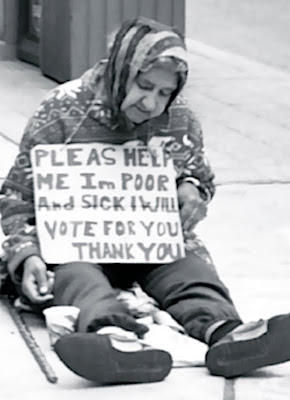


If in your travels you meet the Buddha, throw him through your tv set.
—Davis Fleetwood

 I've found that culture, however useful and important, is neither the foundation nor the ceiling of human experience, even if it is commonly used for walls.





 I really consider President and Mrs. Mubarak to be friends of my family. So I hope to see him often here in Egypt and in the United States. —Hillary Clinton





