Showing posts with label fidel. Show all posts

07 March 2011

yes, well, uhm

[click image]

.

I think we better first consult Russia before believing anything our media puts out about the Paradorian dictator carrying out airstrikes against his people. Too, we need to consult our better sense to wonder anymore if that is even an over-reaction to righteous protest, now don't we? Just as we need to wonder if the Western frame for the "revolutions" in the Middle East might not be just a little on the outright preposterous side, as usual. In short, we need to think for ourselves on this one, get in touch with our own inner, and far greater than we usually settle for, SENSE.
REFLECTIONS OF FIDEL
NATO’s inevitable war (Part II) — (Part I)

WHEN Gaddafi, aged just 28 and a colonel in the Libyan army, inspired by his Egyptian colleague Abdel Nasser, overthrew King Idris I in 1969, he implemented important revolutionary measures such as agrarian reform and the nationalization of oil. The growing income was dedicated to economic and social development, particularly educational and health services for the small Libyan population located in a vast desert territory with very little arable land.

An extensive and deep sea of "fossil water" existed beneath that desert. When I heard about an experimental cultivation area I had the impression that, in the future, those aquifers would be more valuable than oil.

Religious faith, preached with the fervor that characterizes Muslim nations, in part helped to compensate for the strong tribal tendency which still survives in that Arab country.

Libyan revolutionaries devised and implemented their own ideas in relation to legal and political institutions, which Cuba, as a principle, respected.

We totally abstained from expressing any opinions concerning the concepts of the Libyan leadership.

We can clearly see that the fundamental concern of the United States and NATO is not Libya, but the revolutionary wave unleashed in the Arab world, which they wish to prevent at all costs.

It is an irrefutable fact that relations between the United States and its NATO allies in recent years were excellent until the rebellion in Egypt and in Tunisia arose.

In high-level meetings between Libya and NATO leaders, none of the latter had any problems with Gaddafi. The country was a secure source of high-quality oil, gas and even potassium supplies. The problems which arose between them in the early decades had been overcome.

Strategic sectors such as oil pumping and transportation were opened up to foreign investment.

Privatizations were extended to many public enterprises. The International Monetary Fund exercised its beatific role in the implementation of those operations.

Logically, Aznar was fulsome in his praise of Gaddafi and after him, Blair, Berlusconi, Sarkozy, Zapatero and even my friend the King of Spain, paraded past the sardonic regard of the Libyan leader. They were happy.

Although it might seem that I am mocking that is not the case; I am simply asking myself why they now want to take Gaddafi before the International Criminal Court in The Hague.

They are accusing him 24 hours a day of firing on unarmed citizens who were protesting. Why did they not explain to the world that the weapons and, above all, the sophisticated machinery of repression possessed by Libya, was supplied by the United States, Britain and other illustrious hosts of Gaddafi?

I strongly oppose the cynicism and lies currently being used to justify the invasion and occupation of Libya.

The last time that I visited Gaddafi was in May 2001, 15 years after Reagan attacked his very modest residence, where he took me to see what was left of it. It received a direct hit from the aircraft and was considerably destroyed; his little daughter three years of age died in the attack: she was murdered by Ronald Reagan. There was no prior agreement on the part of NATO, the Human Rights Committee, or the Security Council.

My previous visit had taken place in 1977, eight years after the beginning of the revolutionary process in Libya. I visited Tripoli; I took part in the General People’s Congress in Sebha; I toured the first agricultural experiments with water pumped from the vast sea of fossil waters; I visited Benghazi, I was the object of a warm reception. It was a legendary country which had been the scenario of historic battles in World War II. It did not as yet have six million inhabitants, nor were its enormous volumes of oil and fossil waters known. The former Portuguese colonies in Africa had already been liberated.

We had fought for 15 years in Angola against mercenary armies organized along tribal lines by the United States, the Mobutu government, and the well-equipped and trained racist apartheid army. This army, following U.S. instructions, as is now known, invaded Angola in 1975 in order to prevent its independence, reaching the outskirts of Luanda with its motorized forces. A number of Cuban instructors died in that brutal invasion. Resources were sent with all urgency.

Expelled from that country by Cuban internationalists and Angolan troops to the border of South African occupied Namibia, the racists were given the mission of eliminating the revolutionary process in Angola.

With the support of the United States and Israel they developed nuclear weapons. They already possessed them when the Cuban and Angolan troops defeated their land and air forces in Cuito Cuanavale and, defying the risk – using conventional tactics and means – advanced toward the border with Namibia, where the apartheid troops were attempting to resist. Twice in their history our forces have been at risk of attack by those kinds of weapons: in October of 1962 and in southern Angola, but on that second occasion, not even deploying those nuclear weapons that South Africa possessed could they have prevented the defeat which marked the end of the odious system. Those events took place under the government of Ronald Reagan in the United States and Piet Botha in South Africa.

There is no talk of that and the hundreds of thousands of lives which the imperialist adventure cost.

I regret having to recall those events when another great risk is hovering over the Arab peoples, because they are not resigned to continue being the victims of plunder and oppression.

The Revolution in the Arab world so much feared by the United States and NATO is that of those who lack all rights in the face of those who flaunt all privileges, and thus is destined to be more profound than the one unleashed in Europe in 1789 with the storming of the Bastille.

Not even Louis XIV, when he proclaimed that he was the state, possessed the privileges of King Abdullah bin Abdul-Aziz of Saudi Arabia and far less the vast wealth that lies below the surface of that almost desert country, where yankee transnationals determine the pumping and thus the price of oil in the world.

When the Libyan crisis began, extraction in Saudi Arabia rose to one million barrels a day at minimum cost and, in consequence, by that concept alone, the income of that country and those who control it has risen to one billon dollars a day.

No one should imagine that the Saudi people are swimming in money. There are moving accounts of the living conditions of many construction workers and those in other sectors obliged to work 13 to 14 hours a day for paltry wages.

Shocked by the revolutionary wave which is shaking the prevalent system of plunder, in the wake of what took place with workers in Egypt and Tunisia, but also unemployed youth in Jordan, the occupied territories of Palestine, Yemen and even Bahrain and the Arab Emirates with higher per capita income, the upper echelons of the Saudi hierarchy has been impacted by the events.

As opposed to other times, today the Arab peoples receive almost instantaneous information on events, albeit exceptionally manipulated.

The worst thing for the status quo of the privileged sectors is that those persistent events are coinciding with a considerable increase in food prices and the devastating impact of climate change, while the United States, the largest producer of corn in the world, is wasting 40% of that product and a significant part of soy production on biofuels to feed automobiles. Lester Brown, the best informed American ecologist in the world on agricultural products, can surely give us an idea of the current food situation.

The Bolivarian president, Hugo Chávez, is making a valiant effort to find a solution without NATO intervention in Libya. The chances of his attaining that objective would improve if he can achieve the feat of creating a broad movement of opinion before and not after the intervention takes place, and the peoples do not have to see the atrocious experience of Iraq repeated in other countries.

End of Reflection.
The need to open one's mind, to cut from the consensus trance being dictated by our execrable media is so blaring that it makes one squint, hurts one's ears. There is relief to be had by just doing it, at last—quit clinging to the fringes of this obviously sociopathic course at all, quit thrashing around in these oceans of cognitive dissonance, and just get the hell to it. No?

Yes.

.
love, 99
.

05 March 2011

sing it!

[click images]

.

In contrast with what is happening in Egypt and Tunisia, Libya occupies the first spot on the Human Development Index for Africa and it has the highest life expectancy on the continent. Education and health receive special attention from the State. The cultural level of its population is without a doubt the highest. Its problems are of a different sort. The population wasn’t lacking food and essential social services. The country needed an abundant foreign labour force to carry out ambitious plans for production and social development.

For that reason, it provided jobs for hundreds of thousands of workers from Egypt, Tunisia, China and other countries. It had enormous incomes and reserves in convertible currencies deposited in the banks of the wealthy countries from which they acquired consumer goods and even sophisticated weapons that were supplied exactly by the same countries that today want to invade it in the name of human rights.

The colossal campaign of lies, unleashed by the mass media, resulted in great confusion in world public opinion. Some time will go by before we can reconstruct what has really happened in Libya, and we can separate the true facts from the false ones that have been spread.


.
love, 99
.

08 August 2010

eat THIS

[click image]

.

Hugo ROCKS! Don't dis Fidel.

.

07 August 2010

fidel will attend the cuban parliament today

[click images]

.

I think this is going to be very important.
Saturday's appearance will be particularly interesting because the last time Fidel Castro attended parliament was a month before his health emergency. Since then lawmakers have convened with an empty chair set aside for Fidel.

The special session will deal with a topic followed closely by the elder Castro brother: the threat of global nuclear war.

A brief statement read on state television's Friday night newscast did not say if Castro would address the assembly, which will be broadcast nationwide. But it's hard to imagine that he won't since he requested the special session.
I hate to say it, but I feel things beginning to shift into place. I think Fidel does too.

.

UPDATE: BB2 points out in comments [*HE DID NOT! I MISREAD IT!] that so far today people are saying Fidel is urging Obama to attack Iran. I think that [*MY MISREADING] is [*WOULD HAVE BEEN] a misreading of the end of Fidel's most recent regular column:
"’You are backing a country that has hundreds of nuclear weapons [Isreal] but you are saying that you want to stop Iran, which could possibly have them some day…’"

The Iranians have stated that they will fire 100 rockets against every one of the U.S. and Israeli ships that are blockading Iran, as soon as they inspect any Iranian merchant ship.

In that way, when Obama gives the order to comply with the Security Council resolution, he will be decreeing the sinking of all the U.S. warships in that area.

Never before has such a dramatic decision fallen upon a president of the United States. He should have foreseen that.

On this occasion, for the first time in my life, I am addressing United States President Barack Obama:

You must know that it is in your hands to offer humanity the only real possibility of peace. Only on one occasion can you make use of your prerogatives by giving the order to fire.

It is possible that later, on the basis of this traumatic experience, solutions might be found that will not lead us once again to this apocalyptical situation. Everybody in your country, including your worst adversaries of the left or the right, will doubtless be grateful to you, and also the people of the United States, who are not in any way guilty of the situation created.

I ask you to deign to hear this appeal that I am conveying to you in the name of the Cuban people.

I understand that a rapid response cannot be expected, nor would you ever give one. Think it through well, consult your specialists, ask your most powerful allies and international adversaries for their opinion on the matter.

I am not interested in honors or glories. Do it!

The world really can be liberated from nuclear weapons and also conventional ones.

The worst of all the variants will be nuclear war, which is already virtually inevitable. PREVENT IT!
I am pretty sure Fidel meant for Obama to use his prerogative NOT to inspect Iranian ships, to NOT go so far as to force Iran to protect herself. I admit that is not so clear from this wording, but the rest of it, here, and in everything he's written over the years, doesn't make sense if he is urging Obama to provoke the Iranians.

I'm still looking.

.

UPDATE: From the end of a piece at the Miami Herald about his speech in the parliament today:
Castro noted that after months of warning of the risks of nuclear war over the enforcement of sanctions against Iran — he even gave a deadline in June — he's now less pessimistic.

"At first I thought that the imminent danger of war had no solution possible," he said. "I am sure, however, that it will not happen that way and that, on the contrary, the conditions for a solution (...) are being created at this time."

"One man alone will have to make the decision: The president of the United States," Castro said, because Iran will not bow to U.S. and Israeli demands to halt its nuclear program.

If Obama approves an attack on Iran, he added, he will trigger a war that will spread through the Middle East and Asia and cause "the instantaneous death of hundreds of millions people, among them an incalculable number of people in his own country."

The "established order of the planet ... will inevitably collapse, the reigning social order will disappear abruptly" and all currencies will be worthless, he added.

Castro noted that "as luck would have it,'' Obama's father was Muslim and his mother was Christian and added he hoped the U.S. president will become conscious of the threat to world peace.

In comparison, he called Richard Nixon a "cynic," branded Ronald Reagan and Harry Truman as "ignorant" and called Jimmy Carter "a decent person."
So I guess we settled that one anyway.

.

UPDATE: I really hate wading through MSM propaganda for any good bits, but this one was worth the work:
"Fidel attracts more people. There's nobody better than him," said Pedro Gonzalez, a 90-year-old retiree who watched the session of parliament on a nationwide broadcast. "Look how well he's recuperated. It's incredible. Fidel makes us feel better."
Me too, Pedro, me too.

I don't think there will be a reliable translation of his eleven-minute speech until after the weekend, but I'll keep looking.

.

OKAY. PRIME EXAMPLE WHY YOU NEVER TRUST THE AP.
While it was the first time the brothers have appeared together publicly since Fidel fell ill, neither made any effort to approach the other, and they never even seemed to make eye contact.


There is no rift between the Castro brothers. Jesus. Give it a rest.

And, man, being something of an expert on the topic of old men, I can't tell you how great it is to be poring through pages and pages of images of Fidel looking so well. There was almost no hope for his survival, and he damn well has DONE it. I hope he never dies.

.

UPDATE: * Sheesh. I have GOT to train myself not to start blogging before I've had at LEAST a few gulps of coffee. Bad enough I try to comment without enough in me, or while waiting for it to be ready. That's embarrassing enough! I'm leaving this all up here because it's still cogent stuff you need to know, even if I started in on it assuming the preposterous was what was coming of it all... which... in my own defense... is lately a fairly safe assumption....

.

12 July 2010

viva fidel forever

[click image]

.

Fidel Castro appears on Cuban TV
By Isabel Sanchez (AFP) – 1 hour ago

HAVANA — Aging former Cuban leader Fidel Castro appeared on television for the first time in nearly a year on Monday, as the government began releasing 52 dissidents under a landmark deal brokered with the Catholic Church.

Castro, 83, appeared healthy and animated as he discussed his views on the Middle East and North Korea in a recorded interview with the anchor of the "Round Table" news and analysis show, which aired on state-run television at 6:30 pm (2230 GMT).

The Cuban revolutionary spoke of an "imminent" US and Israeli attack on Iran, and blamed the United States for secretly sinking a South Korean warship in March, then accusing North Korea of being behind the incident.

An international inquiry found that the North had torpedoed South Korea's Cheonan corvette, killing 46 sailors. But Pyongyang has angrily denied responsibility.

Castro has made only sporadic appearances — either on television or in public — since emergency intestinal surgery in July 2006 drove him to hand power to his younger brother Raul.

Political columns in Fidel Castro's name are published regularly in state media, but the columns have focused for the past year on international affairs and largely ignored domestic affairs.

The television interview was taped, as were two previous Castro performances on the program in June and September of 2007.

Recent events represent something of a return to form for Castro, who turns 84 next month.

He was photographed at a public function at a science center on Wednesday, believed to be his first public outing since December, when he left his residence to meet visiting Venezuelan President Hugo Chavez.

Five photos were published over the weekend of Castro wearing a track suit — his customary attire since relinquishing the presidency — greeting well-wishers at Havana's National Center for Scientific Investigation.

The bout of Castro appearances comes at a delicate time politically for Cuba as it begins releasing dissidents under a landmark deal brokered with the Catholic Church last week.

If all 52 activists are freed as the government has promised, it would be the largest prisoner release of Raul Castro's tenure.

The last video of Castro was almost a year ago when he was filmed in an animated conversation with a group of law students from Venezuela's University of Carabobo.

Guerrilla revolutionary and communist idol, Castro held out against history when he turned tiny Cuba into a thorn in the paw of the mighty capitalist United States.

Famed for his rumpled olive fatigues, straggly beard and the cigars he reluctantly gave up for his health, he kept a tight clamp on dissent at home while defining himself abroad with his defiance of Washington.

Castro and a band of followers launched their revolt in earnest on December 2, 1956 when they landed in southeastern Cuba on the ship Granma.

Twenty-five months later, against great odds, they ousted president Fulgencio Batista and Castro was named prime minister.

After leading the Americas' only one-party communist country through nearly half of the 20th century and into the 21st, he still serves as first secretary of Cuba's Communist Party.


.

11 July 2010

good-bye al jazeera


[click image]

.

Among the many other things it has come out that President Kennedy was doing and on the verge of doing, normalizing relations with Cuba was one of them. Today, we see al Jazeera reporting, in a fairly skeptical tone, a public appearance by Fidel. It is not the first one since his surgery. He has stood for photo ops with visiting dignitaries since then, and not the least of them was Hugo Chàvez. This is the second time in a few days they have provided me with not COMPLETE rubbish, but entirely too INCOMPLETE, and CAREFUL, information. They are 100% definitely NOT the al Jazeera we leapt to admire for the real information they put out so fearlessly.

I know, I know, a few well-placed slaughters of their personnel really can do wonders for a news organization... as it has for our NATION. This is NOT going to improve.

Welcome to hell.

.

11 June 2010

at least FIVE leaks [blowouts] now identified in the gulf

[click image]

.

YOU DO NOT WANT TO MISS THIS LINK.

There are three "leaks" so far publicly associated with Deepwater Horizon / Thunder Horse... plus TWO more... and it's altogether conceivable you missed the full impact of my crazed investigations yesterday, so go back and follow those links too... OR listen to the barnswoggle being put out on yer TVs.

Your call.

.
BP says approximately 210,000 gallons of oil are spilling into the Gulf per day. But John Amos, a geologist at the West Virginia-based nonprofit SkyTruth, says that at least 1.1 million gallons of oil is leaking out of the well every day. His calculation is based on early NASA images of the slick that showed it covering 2,200 square miles of the Gulf, and on the estimated thickness of oil needed for the slick to be visible from space. "If it really is just 210,000 and they can't handle that—you've got to be kidding me," says Amos, who has tracked the changing estimates of the spill on his blog. "One of the world's biggest oil companies plus the Coast Guard has been beaten by 210,000 gallons a day—do they really want us to think that?"

But even this figure may be on the low end. Under pressure, BP for the first time released video of the sea floor spill site this week. Steven Wereley, an associate professor of mechanical engineering at Purdue University, analyzed the tape and told NPR this week that the oil flow is likely closer to 3 million gallons a day.
If that's the case, the situation in the Gulf would equal more than two Exxon Valdez spills every week. The Exxon Valdez incident was, until now, the worst oil spill disaster in US history.

And the absolute worst-case-scenario? According to government data on daily production at another Gulf well, the BP spill could spew 6 million gallons per day if the wellhead that's currently restricting the flow breaks.
.

I still want to know WHAT externality would cause the oil to gush SO catastrophically if the companies stopped APPLYING the pressure to keep their reservoirs from being fouled...? I don't GET it. Yes, there would still be considerable problem with oil blurping up from the fistulae, as it were, caused by all the drill holes, but it seems to me this would be a much more relaxed and far slower release of crude into the Gulf. No? And wouldn't it be easier to get at these breaks and plug them with balloons until something more sturdy can be applied?

Did they EVER have a way to soundly plug these puppies once they were done with them?

I'M TRYING TO SAY THAT I THINK THIS MESS COULD BE MITIGATED IMMEDIATELY AND STOPPED ALTOGETHER IF THEY QUIT WITH THE BACK PRESSURE ON ALL THE RIGS.

Have I got the concept wrong?

I do KNOW that means giving up their precious oil there, but, well... uhm...?

.

I HAVE BEEN DREADING THIS THE MOST.

I have not wanted to say it because, actually, Cubans are not ultimately worth more or less than anyone else, but it's just so awful that we are almost certainly going to slime them so hard they can't get back up, after all these decades of trying to starve them. They SO do not deserve this. I haven't been able to make myself go over to Granma to see what they're saying yet... and I've been thinking about it for weeks.

Maybe I oughta just take a slug of brandy and do it now....

I'll get back to you on it.

.

Well, it seems I have girded myself for nothing. Fidel is griping about us being the ones who sunk the South Korean ship and majorly griping about Israel and our treatment of Iran... and the possible health risks of cell phones.

I probably should have married him.

.

23 December 2009

admit it, you wish he was ours

[click image]

.
Reflections by comrade Fidel

THE TRUTH OF WHAT HAPPENED AT THE SUMMIT

The youth is more interested than anyone else in the future.

Until very recently, the discussion revolved around the kind of society we would have. Today, the discussion centers on whether human society will survive.

These are not dramatic phrases. We must get used to the true facts. Hope is the last thing human beings can relinquish. With truthful arguments, men and women of all ages, especially young people, have waged an exemplary battle at the Summit and taught the world a great lesson.

It is important now that Cuba and the world come to know as much as possible of what happened in Copenhagen. The truth can be stronger than the influenced and often misinformed minds of those holding in their hands the destiny of the world.

If anything significant was achieved in the Danish capital, it was that the media coverage allowed the world public to watch the political chaos created there and the humiliating treatment accorded to Heads of States or Governments, ministers and thousands of representatives of social movements and institutions that in hope and expectation traveled to the Summit’s venue in Copenhagen. The brutal repression of peaceful protesters by the police was a reminder of the behavior of the Nazi assault troops that occupied neighboring Denmark on April 1940.

But no one could have thought that on December 18, 2009, the last day of the Summit, this would be suspended by the Danish government—a NATO ally associated with the carnage in Afghanistan—to offer the conference’s plenary hall to President Obama for a meeting where only he and a selected group of guests, 16 in all, would have the exclusive right to speak.

Obama’s deceitful, demagogic and ambiguous remarks failed to involve a binding commitment and ignored the Kyoto Framework Convention. He then left the room shortly after listening to a few other speakers. Among those invited to take the floor were the highest industrialized nations, several emerging economies and some of the poorest countries in the world. The leaders and representatives of over 170 countries were only allowed to listen.

At the end of the speeches of the 16 chosen, Evo Morales, with the authority of his indigenous Aymara origin and his recent reelection with 65% of the vote as well as the support of two-thirds of the Bolivian House and Senate, requested the floor. The Danish president had no choice but to yield to the insistence of the other delegations. When Evo had concluded his wise and deep observations, the Danish had to give the floor to Hugo Chavez. Both speeches will be registered by history as examples of short and timely remarks. Then, with their mission duly accomplished they both left for their respective countries. But when Obama disappeared, he had yet to fulfill his task in the host country.

From the evening of the 17th and the early morning hours of the 18th, the Prime Minister of Denmark and senior representatives of the United States had been meeting with the Chairman of the European Commission and the leaders of 27 nations to introduce to them—on behalf of Obama—a draft agreement in whose elaboration none of the other leaders of the rest of the world had taken part. It was an antidemocratic and practically clandestine initiative that disregarded the thousands of representatives of social movements, scientific and religious institutions and other participants in the Summit.

Through the night of the 18th and until 3:00 a.m. of the 19th, when many Heads of States had already departed, the representatives of the countries waited for the resumption of the sessions and the conclusion of the event. Throughout the 18th, Obama held meetings and press conferences, and the same did the European leaders. Then, they left.

Something unexpected happened then: at three in the morning of the 19th, the Prime Minister of Denmark convened a meeting to conclude the Summit. By then, the countries were represented by ministers, officials, ambassadors and technical staff.

However, an amazing battle was waged that morning by a group of representatives of Third World countries challenging the attempt by Obama and the wealthiest on the planet to introduce a document imposed by the United States as one agreed by consensus in the Summit.

The representative of Venezuela, Claudia Salerno, showed with impressive energy her right hand bleeding from strongly slamming on the table to claim her right to take the floor. Her tone of voice and the dignity of her arguments will never be forgotten.

The Minister of Foreign Affairs of Cuba made a vigorous speech of approximately one thousand words from which I have chosen a few paragraphs to include in this Reflection:
“The document that you, Mister Chairman, repeatedly claimed that did not exist shows up now. […] we have seen drafts circulating surreptitiously and being discussed in secret meetings…”

“…I deeply resent the way you have led this conference.”

“…Cuba considers the text of this apocryphal draft extremely inadequate and inadmissible. The goal of 2 degrees centigrade is unacceptable and it would have incalculable catastrophic consequences…”

“The document that you are unfortunately introducing is not binding in any way with respect to the reduction of the greenhouse-gas emissions.”

“I am aware of the previous drafts, which also through questionable and clandestine procedures, were negotiated by small groups of people…”

“The document you are introducing now fails to include the already meager and lacking key phrases contained in that draft…”

“…as far as Cuba is concerned, it is incompatible with the universally recognized scientific view sustaining that it is urgent and inescapable to ensure the reduction of at least 45% of the emissions by the year 2020, and of no less than 80% or 90% by 2050.”

“Any argument on the continuation of the negotiations to reach agreement in the future to cut down emissions must inevitably include the concept of the validity of the Kyoto Protocol […] Your paper, Mister Chairman, is a death certificate of the Kyoto Protocol and my delegation cannot accept it.”

“The Cuban delegation would like to emphasize the preeminence of the principle of ‘common by differentiated responsibilities,’ as the core of the future process of negotiations. Your paper does not include a word on that.”

“This draft declaration fails to mention concrete financial commitments and the transfers of technologies to developing countries, which are part of the obligations contracted by the developed countries under the UN Framework Convention on Climate Change […] Mister Chairman, by imposing their interests through your document, the developed nations are avoiding any concrete commitment.”

“…What you, Mister Chairman, define as ‘a group of representative leaders’ is to me a gross violation of the principle of sovereign equality consecrated in the United Nations Charter…”

“Mr. Chairman, I formally request that this statement be included in the final report of the works of this regrettable and shameful 15th session of the Conference of the Parties.”
The representatives of the countries had been given only one hour to present their views. This led to complicated, shameful and embarrassing situations.

Then, a lengthy debate ensued where the delegations from the developed countries put a heavy pressure on the rest to make the conference adopt the abovementioned document as the final result of their deliberations.

A small number of countries firmly insisted on the grave omissions and ambiguities of the document promoted by the United States, particularly the absence of a commitment by the developed countries on the reduction of carbon emissions and on the financing that would allow the South countries to adopt alleviating and adjustment measures.

After a long and extremely tense discussion, the position of the ALBA countries and Sudan, as President of the G-77, prevailed that the document was unacceptable to the conference thus it could not be adopted.

In view of the absence of consensus, the Conference could only “take note” of the existence of that document representing the position of a group of about 25 countries.

After that decision was made—at 10:30 in the morning Denmark’s time—Bruno, together with other ALBA representatives, had a friendly discussion with the UN Secretary to whom they expressed their willingness to continue struggling alongside the United Nations to prevent the terrible consequences of climate change. Their mission completed, our Foreign Minister and Cuban Vice President Esteban Lazo departed to come back home and attend the National Assembly session. A few members of the delegation and the ambassador stayed in Copenhagen to take part in the final procedures.

This afternoon they reported the following:
“…both, those who were involved in the elaboration of the document, and those like the President of the United States who anticipated its adoption by the conference…as they could not disregard the decision to simply ‘take note’ of the alleged ‘Copenhagen Agreement,’ they tried to introduce a procedure allowing the other COP countries that had not been a part of the shady deal to adhere to it, and make it public, the intention being to pretend such an agreement was legal, something that could precondition the results of the negotiations that should carry on.”

“Such belated attempt was again firmly opposed by Cuba, Venezuela and Bolivia. These countries warned that a document which had not been adopted by the Convention could not be considered legal and that there was not a COP document; therefore, no regulations could be established for its alleged adoption…”

“This is how the meeting in Copenhagen is coming to an end, without the adoption of the document surreptitiously worked out in the past few days under the clear ideological guidance of the US Administration…”
Tomorrow our attention will be focused on the National Assembly.

Lazo, Bruno and the other members of the delegation will be arriving at midnight. On Monday, the Minister of Foreign Affairs will be able to explain in detail and with the necessary accuracy the truth of what happened at the Summit.


Fidel Castro Ruz
December 19, 2009
8:17p.m.
.

19 December 2009

deathless solidarity

[click image]

.
Message to the president of the Bolivarian Republic of Venezuela

DEAR Hugo,

Today is the 15th anniversary of our encounter at the University of Havana’s Aula Magna on December 14, 1994. The previous night, I had waited for you at the foot of the steps of the plane that brought you to Cuba.

I knew of your armed uprising against the pro-yanki government of Venezuela. News had reached Cuba of your ideas when you were still in prison and, like us, you devoted yourself to intensifying the revolutionary ideas which brought you to the uprising of February 4, 1992.

At the Aula Magna, in a spontaneous and transparent way, you voiced the Bolivarian ideas that you carried within you, and that led you, in the specific conditions of your country and our times, to the struggle for the independence of Venezuela against the tyranny of the empire. After the effort of Bolívar and other great men who, filled with dreams, fought against the yoke of Spanish colonialism, Venezuelan independence was merely a ridiculous pretense.

No moment in history is the same as any other; no idea or human event can be judged outside of its own era. Both you and I share concepts that have evolved throughout millennia, but which have much in common with distant or recent history in that the division of society into masters and slaves, exploiters and the exploited, oppressors and the oppressed has always been antipathetic and odious. In the present day, it is the source of the most profound shame and the main cause of human suffering and unhappiness.

When productivity, now supported by science and technology, has increased tenfold and, in certain aspects, even hundreds or thousands of times more, such unjust differences should disappear.

You, I and millions of Venezuelans and Cubans share those ideas.

You started with the Christian principles that were instilled in you from an early age and a rebellious nature; I, from the ideas of Marx and a likewise rebellious nature.

There are universally recognized ethical principles which are valid for both Christians and Marxists.

From that starting point, revolutionary ideas are constantly enriched through study and experience.

It is appropriate to note that our sincere and revolutionary friendship emerged when you were not the president of Venezuela. I never asked you for anything. When the Bolivarian movement won its victory in the 1999 elections, the price of oil was less that $10 per barrel. I remember that well because you invited me to your inauguration ceremony.

Your support for Cuba was spontaneous, just as our cooperation with the sister people of Venezuela has always been.

In the midst of the Special Period, following the demise of the USSR, the empire intensified its brutal blockade of our people. At a certain point, fuel prices rose, thus making it difficult for us to obtain supplies. You then guaranteed a safe, steady commercial supply to our country.

We cannot forget that after the political coup against the Bolivarian Revolution in April 2002 and your brilliant victory in the oil coup at the end of that same year, oil prices rose to $60-plus per barrel. You then offered us fuel supplies and credit facilities. Bush was already president of the United States and the mastermind of those illegal and treacherous attacks on the Venezuelan people.

I remember how annoyed you were at his demand that I leave Mexico as a precondition for his landing in that long-suffering country, where you and I were attending a United Nations international conference in which he also should have participated.

They will never forgive the Bolivarian Revolution for its support for Cuba at a time when the empire imagined that our people, after almost half a century of resistance, would once again fall into their hands. In Miami, the counterrevolution demanded three days’ license to kill revolutionaries as soon as the transition government demanded by Bush was installed in Cuba.

Ten years of exemplary and fruitful cooperation between Venezuela and Cuba have passed. The ALBA was born in that period. The U.S-promoted FTAA had failed but the empire was once again on the offensive.

The coup d’état in Honduras and the installation of seven U.S. military bases in Colombia are recent events that occurred after the inauguration of the new president of the United States. His predecessor had reestablished the 4th Fleet, half a century after the end of the last World War, when the Cold War was over and the Soviet Union no longer existed. The real intentions of the empire are obvious this time, behind the amiable smile and African-American face of Barack Obama.

Yesterday, Daniel Ortega explained how the coup in Honduras determined the weakening and conduct of the members of the Central American Integration System.

The empire is mobilizing the right-wing forces of Latin America to strike at Venezuela and, with that, the other ALBA member states. If the considerable oil and gas resources of Bolívar’s homeland were once again seized, the English-speaking Caribbean countries and other nations in Central America would lose the generous supply conditions today offered by revolutionary Venezuela.

Just a few days ago, after President Barack Obama’s speech at the West Point military academy announcing the deployment of a further 30,000 troops to the war in Afghanistan, I wrote a Reflection in which I described as "an unprincipled act" his acceptance of the Nobel Peace Prize when he had already adopted that that decision.

On December 10, during his acceptance speech in Oslo, he made statements that were an example of imperialist logic and thinking. "… I am responsible for the deployment of thousands of young Americans to battle in a distant land. Some will kill. Some will be killed," he affirmed in trying to present as a "just war" the brutal carnage taking place in that distant land, in which the majority of those who perish are defenseless villagers struck by bombs dropped from drone planes.

After those phrases, which were among the first that he spoke, he devoted more than 4,600 words to presenting his massacre of civilians as a just war. "In today's wars," he affirmed, "many more civilians are killed than soldiers."

More than one million non-combatant civilians have now died in Iraq, Afghanistan and along the Pakistan border.

In that same speech, he praises Nixon and Reagan as distinguished individuals, without stopping to recall that one of them dropped more than one million tons of bombs on Vietnam, and the other one had the Siberian gas pipeline blown up by electronic means so that it would look like an accident. The blast was so great and devastating that nuclear test monitoring equipment registered it.

The speech he gave in Oslo differs from that of West Point because the latter was better crafted and recited. In the Norwegian capital, the speaker’s face demonstrated that he was aware of the insincerity of his words.

Neither the timing nor the circumstances were the same. Oslo is located close to Copenhagen. In that city, the extremely important Climate Change Conference, which I know that you and Evo are planning to attend, is taking place. The most important political battle in human history is being fought there at this very moment. There, one can appreciate in all its magnitude the scope of the damage that developed capitalism has inflicted on humanity. Today, the conference must desperately fight not just for justice but also for the survival of the species.

I have closely followed the ALBA meeting. I congratulate you all. I very much enjoyed seeing so many beloved friends outlining ideas and fighting in a united way. I congratulate you all.

¡Hasta la victoria siempre!

A warm embrace.

Fidel Castro Ruz
December 14, 2009
.

12 December 2009

GOOOOOOOOD!!!

[click image]

.
Do NOT trust this lying sack of shit! He tosses off coups d'état more easily than swatting flies.

Ask Honduras.
.

16 November 2009

science fiction story

[click image]

REFLECTIONS OF FIDEL
A science fiction story
(Taken from CubaDebate)

HOW I regret having to criticize Obama, knowing that in that country there are other potential presidents worse than him. I understand that in the United States that office is currently a tremendous headache. Perhaps nothing could explain it better than the information in yesterday’s Granma that 237 members of the U.S. Congress; in other words, 44% of them, are millionaires. That does not mean that every one of them is obliged to be an incorrigible reactionary, but it is very difficult that they might think like any of the many millions of U.S. citizens who lack medical care, are unemployed or have to work hard to earn a living.

Obama, of course, is not a beggar, he possesses millions of dollars. As a professional he was outstanding; his domination of language, his eloquence and his intelligence are undisputed. Despite being an African American he was elected president for the first time in the history of his country in a racist society that is suffering from a profound international economic crisis, the responsibility for which falls upon itself.

It is not about being or not being anti-American, as the system and its colossal media try to describe its adversaries.
The U.S. people are not responsible for, but the victims of an unsustainable system and, what is worse, one that is now incompatible with the life of humanity.

The intelligent and rebel Obama who had to endure humiliation and racism during his childhood and youth understands that, but the Obama who is educated and committed to the system and the methods that led him to the presidency of the United States cannot resist the temptation to pressure, threaten and even deceive others.

He is obsessive in his work; possibly no other president of the United States would be capable of committing himself to a program as intensive as the one that he proposes to undertake in the next eight days.

According to his program, a wide-ranging tour will take him to Alaska, where he is to talk with troops deployed there; to Japan, Singapore, the People’s Republic of China and South Korea; he is to take part in the meeting of the Asia-Pacific Economic Cooperation (APEC) Forum and the Association of Southeast Asian Nations (ASEAN); he will have talks with the prime minister of Japan and His Majesty Emperor Akihito in the Land of the Rising Sun; the president of Indonesia, Susilo Bambang; of Russia, Dmitri Medvedev, and of the People’s Republic of China, Hu Jintao; he will give speeches and press conferences; he will carry his nuclear briefcase that we trust he will not need to use during his accelerated tour.

His security adviser has informed that he is to discuss with the president of Russia extending the START-1 Treaty, which expires on December 5, 2009. Certain reductions in the enormous nuclear arsenal will doubtless be agreed, without significance for the economy and world peace.

What is our illustrious friend thinking of taking on during his intensive voyage? The White House has solemnly announced it: climate change, economic recovery, nuclear disarmament, the war in Afghanistan, the risks of war in Iran and in the Democratic People’s Republic of Korea. There is enough material here to write a book of fiction.

But how is Obama going to resolve climate problems if the position of his representation in the preparatory meetings for the Copenhagen Summit on greenhouse gas emissions was the worst of all the industrialized and rich countries, both in Bangkok and in Barcelona, because the United States has not signed the Kyoto Protocol, nor is that country’s oligarchy disposed to genuinely cooperate.

How is he going to contribute to the solution of the grave economic problems affecting a large part of humanity, when the total debt of the United States – which includes federal government, state and local governments, companies and families – amounted at the end of 2008 to $57 trillion, equivalent to more than 400% of its GDP, and when that country’s budget deficit rose to close to 13% of its GDP in the fiscal year 2009, a figure that Obama is doubtless aware of.

What can he offer Hu Jintao when his policy has been openly protectionist in order to hit Chinese exports; when he is demanding at all costs that the Chinese government should revalue the yuan, which would affect growing Third World imports proceeding from China.

The Brazilian theologian Leonardo Boff – who is not a disciple of Karl Marx, but an honest Catholic, one of those who is not prepared to cooperate with imperialism in Latin America – recently affirmed: "…we are risking our destruction and the devastation of the diversity of life."

"…almost half of humanity is now living below the poverty level. The richest 20% consume 82.49% of all the Earth’s wealth and the 20% poorest have to sustain themselves with a miniscule 1.6%." He quotes the FAO warning that "…in the coming years there will be between 150 and 200 million climate refugees." And he adds that in his estimate: "humanity is now consuming 30% more than its reposition capacity… The Earth is showing unequivocal signs that it cannot take any more."

What he affirms is a fact, but Obama and the U.S. Congress have not as yet heard that.

What is he leaving us in the hemisphere? The shameful problem of Honduras and the annexation of Colombia, in which country the United States is to install seven military bases. They also established a military base in Cuba more than 100 years ago and still occupy it by force. On it they installed the horrific torture center known worldwide, which Obama has been unable to close as yet.

I sustain the belief that before Obama concludes his mandate there will be six to eight rightist governments in Latin America allied to the empire. Likewise in the near future, the most right-wing sector in the United States will try to limit his mandate to a period of four years. A Nixon, a Bush or somebody like Cheney will once again be new presidents. Then one would see with all clarity the significance of those absolutely unjustifiable military bases that are now threatening all the peoples of South America on the pretext of combating drug trafficking, a problem created by the tens of billions of dollars from the United States being injected into organized crime and drug production in Latin America.

Cuba has demonstrated that in order to combat drugs what is needed is justice and social development. In our country, the crime figure per every 100,000 inhabitants is one of the lowest in the world. No other [country] in the hemisphere can show such low indices of violence. It is known that in spite of the blockade, none other possesses such high educational levels.

The peoples of Latin America will know how to resist the onslaughts of the empire!

Obama’s tour would seem to be a science fiction story.


Fidel Castro Ruz
November 11, 2009
7:16 p.m.

25 October 2009

listen to sean, fidel

[click image]

I think they got it wrong about Sean being buddies with POTUS, but, well, I think it's funny to emerge from the U2 concert to first find al Jazeera reporting that Obama's sending a message through the Spanish government and then that RIA Novosti was reporting that Sean Penn is on his way to meet with Fidel. I don't know for sure but I think Fidel would rather deal with truth tellers than lying heads of state.

23 August 2009

looking good

[click image]
'Fit' Fidel appears on Cuba TV

Fidel Castro, Cuba's former president, has appeared on state television for the first time in a year, suggesting that his once-failing health has improved.

The footage, broadcast on Sunday, showed the 83-year-old Castro meeting students from Venezuela at an undisclosed location a day earlier.

His picture was also appeared in a newspaper the same day.

Castro has not been seen in public since July 2006, when he underwent intestinal surgery for a still-undisclosed ailment. His health is considered a state secret.

In February 2008, he stepped down as president, ceding power to his brother, Raul, and he last appeared on state television in June that year.

Planet's future

In Sunday's television broadcast he appeared in good health, telling the students that he was worried about the future of the planet, under threat from global warming.

"Even the Pentagon has become involved," Castro said.

"It has included the climate among things that threaten the security of the United States."

The students presented Castro with a T-shirt and sang: "We love you, Fidel. We love you."

Castro, wearing a blue track suit, told the students that Cuba stood by the Venezuelan government of President Hugo Chavez, a close friend and ally of Castro.

Meeting with Correa

The footage followed a front-page photograph of Castro meeting Rafael Correa, the Ecuadorean president, published in the official Juventud Rebelde newspaper.

A brief official note said Castro and Correa spoke for a number of hours on Friday about recent developments in their respective countries, Latin America and the world.

As Cubans gathered at kiosks on Sunday morning to pick up the paper, word spread that Fidel's photo had appeared.

"I'm waiting for the paper to see him because it's been a long time since a photo was published and I want to see how he is," said Arturo Martinez, one of those waiting for the paper to arrive a few blocks from Communist Party and government headquarters.

28 June 2009

everyone's arriving in managua, i think

[click image, Zelaya supporter in Managua]

I have confirmation that Chávez and Correa have both arrived and been greeted by Ortega, but I only know that Zelaya has left for the airport in Costa Rica... no word on his arrival for the meeting yet. I just hate it when Latin American presidents get in planes. It's going to give me an ulcer. A bunch of them, including Zelaya, are due to be meeting tonight and in the morning, and everybody better damn well arrive safely....

Oh, thank you, Granma... yes! He's arrived safely.

---------------------------------------------------------

A word from Fidel a couple days ago:
I am halting for a moment the work on a historic episode that I have been writing for the last two weeks to express my solidarity with the constitutionally-elected president of Honduras, José Manuel Zelaya.

It was impressive to see him on Telesur, haranguing the people of Honduras. He energetically denounced the blatantly reactionary attempt to prevent an important popular referendum. That is the "democracy that imperialism defends. Zelaya has not committed the slightest violation of the law. He did not engage in any act of force. He is the president and commander-general of the Armed Forces of Honduras. What is happening there will be a test for the OAS and for the current United States administration.

Yesterday a meeting of the ALBA took place in Maracay, in the Venezuelan state of Aragua. The Latin American and Caribbean leaders who spoke there shone out both for their eloquence and for their dignity.

Today I was listening to the solid arguments of President Hugo Chávez, denouncing the coup action on Venezolana de Televisión.

We do not know what will happen tonight or tomorrow in Honduras, but the brave conduct of Zelaya will go down in history.

His words reminded us of the speech by President Salvador Allende as warplanes bombarded the Presidential Palace, where he heroically died on September 11, 1973. This time we were seeing another Latin American president entering an air base with his people to demand the ballots for a popular referendum, spuriously confiscated.

That is how a president and a commander-general acts.

The people of Honduras will never forget that gesture!

Funny how we have to think of men like Allende at times like this, isn't it?

---------------------------------------------------------

Neatly averted the President Ma problem, though....

---------------------------------------------------------

UN and OAS getting in on this action
On Tuesday the OAS General Assembly will hold a special session to address the issue and take whatever decisions it considers appropriate, in accordance with the Charter of the Organization of American States, international law, and the provisions of the Inter-American Democratic Charter.

Country members of the Bolivarian Alliance of the Americas, ALBA meeting in Managua, Nicaragua also condemned the coup perpetrated in alliance with the “oligarchy and reactionary forces of Honduras”.

“We demand the immediate return to the rule of law and restitution of President Manuel Zelaya to his constitutional functions”, added the statement.

ALBA is made up of Bolivia, Cuba, Dominica, Ecuador, Honduras, Nicaragua, Saint Vincent and Grenadines, Antigua and Venezuela.
---------------------------------------------------------

Ann has some good links up....

---------------------------------------------------------

A little history and familiarization with the territory....

---------------------------------------------------------

Bloomberg manages an almost balanced accounting of things up to the minute.... As noted earlier, and of course you would know anyway, I revile Twinkle Toes' vapid pronouncements of "concern" where they don't belong, for one reason or another, and I'm suspicious of the weak little threat to maybe stop trading with Honduras, since we probably already own most of what's worth anything there, and can hardly escape intense suspicion in this matter, AND OUR MILITARY HAS MADE ITSELF ESPECIALLY COZY WITH THE HONDURAN MILITARY.

[Note the date. Note well the date. Then get back to me on what's "changed" since 20 January, okay?]

Goddammit, anyway, I'm going to bed rooting for ALBA... for dawn....

coup against leftist honduran president zelaya

[click image]
"They kidnapped him like cowards," Melissa Gaitan, 21, an employee of the official government television station, screamed as tears streamed down her face. "We have to rally the people to defend our president."
President Go Fuck Yourself is expressing his, surprise, concern... again. Some accounts say it was not only the president of Honduras but ambassadors of other countries as well.

Granma

venezuelanalysis.com

Let's see how much media coverage Honduran protesters get, shall we?

__________________________________________________________________________

Yeah, well, he spoke too soon:
Honduras's Zelaya says US helped thwart coup-paper
Sun Jun 28, 2009 7:12am EDT

MADRID, June 28 (Reuters) - Honduran President Manuel Zelaya told Spain's El Pais that a planned attempt to wrest power him was thwarted after the United States declined to back the move.

"Everything was in place for the coup and if the U.S. embassy had approved it, it would have happened. But they did not ... I'm only still here in office thanks to the United States," he said in the newspaper interview published on Sunday.

"Last (Friday) morning, at around 1 or 2 a.m., Congress was passing a decree to incapacitate me and the armed forces were mobilised. But phone calls were made -- I can't say by who or from where -- but these calls stopped the coup," he said.

Zelaya, an ally of Venezuela's socialist President Hugo Chavez, is holding an unofficial vote on Sunday to gauge public support for lifting constitutional limits on presidential terms despite objections by courts and the military.

Sunday's vote will hold no legal weight after a court ruled it invalid.

Zelaya told El Pais he had no intention of re-running for the presidency. Opposition groups say the referendum is designed to keep him in power after the national election in November.

"My government ends January 27, 2010 ... but I want to make it possible that a president can be re-elected in the future. Although I don't know whether I'll be available then," he said.

The whole world has been duped by our President Smooth Operator. I mean, should we call him Lover Boy? No place for beginners or sensitive hearts?

17 May 2009

someone else bothering to try to tell the truth

[click image]

It was already a hairy mess in Mexico, before we ever heard of it.

If you have a subscription to Science, here you go.

27 April 2009

even fidel is trying to save obummer from himself

[click image]

The old men are pulling for you, Cinderella. How 'bout you man up and start doing things right?

22 April 2009

now, wait just a doggone minute here

[click image]
Fidel Castro: Obama 'misinterpreted' Raul's words
2 hours ago

HAVANA (AP) — Fidel Castro says that President Barack Obama "misinterpreted" his brother Raul's sentiments toward the United States.

Raul Castro prompted widespread speculation last week that the U.S. and Cuba could be headed toward a thaw in nearly a half-century of chilly relations, when he said Cuban leaders would be willing to discuss "everything" with the U.S., including human rights, freedom of the press and speech, and political prisoners.

Obama responded by saying Washington seeks a new beginning with Cuba but he also said that Cuba should release some political prisoners and reduce official taxes on remittances from the U.S. as a sign of goodwill.

Fidel Castro wrote in an essay on Tuesday that Obama "without a doubt misinterpreted Raul's declarations."

Heh. I was wondering how long it would take for him to weigh in. I don't think even death will stop him.

__________________________________________

Here it is in his own words....

Sometimes I have a heck of a time getting into Granma and I couldn't get to it when it first came out.

19 April 2009

panic on the fascist news wires

[click image]
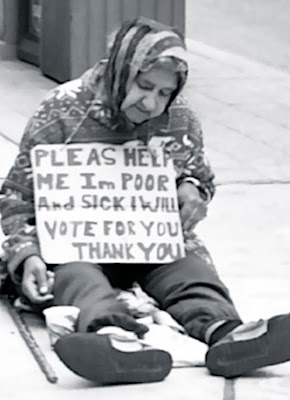
American exceptionalism's panties are bunched:
Analysis: Obama gores foreign policy ox
by STEVEN R. HURST, Associated Press Writer – 2 hrs 11 mins ago

WASHINGTON – President Barack Obama has gone abroad and gored an ox — the deeply held belief that the United States does not make mistakes in dealings with either friends or foes.

And in the process, he's taking a huge gamble both at home and abroad, for a payoff that could be a long time coming, if ever.

By way of explanation, senior adviser David Axelrod describes the president's tactics this way:

"You plant, you cultivate, you harvest. Over time, the seeds that were planted here are going to be very, very valuable."

While historic analogies are never perfect, Obama's stark efforts to change the U.S. image abroad are reminiscent of the stunning realignments sought by former Soviet leader Michael Gorbachev. During his short — by Soviet standards — tenure, he scrambled incessantly to shed the ideological entanglements that were leading the communist empire toward ruin.

But Obama is outpacing even Gorbachev. After just three months in power, the new American leader has, among many other things:

• Admitted to Europeans that America deserves at least part of the blame for the world's financial crisis because it did not regulate high-flying and greedy Wall Street gamblers.

• Told the Russians he wants to reset relations that fell to Cold War-style levels under his predecessor, George W. Bush.

• Asked NATO for more help in the fight in Afghanistan, and, not getting much, did not castigate alliance partners.

• Lifted some restrictions on Cuban Americans' travel to their communist homeland and eased rules on sending wages back to families there.

• Shook hands with, more than once, and accepted a book from Hugo Chavez, the virulently anti-American leader of oil-rich Venezuela.

• Said America's appetite for illegal drugs and its lax control of the flow of guns and cash to Mexico were partly to blame for the drug-lord-inspired violence that is rattling the southern U.S. neighbor.

• Said that "if our only interaction with many of these countries is drug interdiction, if our only interaction is military, then we may not be developing the connections that can, over time, increase our influence" — neglecting to mention U.S. health care, education and humanitarian relief efforts in Latin America.

At a news conference ending the three-day Summit of the Americas on Sunday, Obama was asked to explain what a reporter called this emerging "Obama Doctrine."

He said that first, he remains intent on telling the world that the United States is a powerful and wealthy nation that realizes it is just one country among many. Obama said he believes that other countries have "good ideas" and interests that cannot be ignored.

Second, while the United States best represents itself by living up to its universal values and ideas, Obama said it must also respect the variety of cultures and perspectives that guide both American foes and friends.

"I firmly believe that if we're willing to break free from the arguments and ideologies of an earlier era and continue to act, as we have at this summit, with a sense of mutual responsibility and mutual respect and mutual interest, then each of our nations can come out of this challenging period stronger and more prosperous, and we can advance opportunity, equality, and security across the Americas," the president said.

Critics, especially those deeply attached to the foreign policy course of the past 50-plus years, see a president whose lofty ideals expose the country to a dangerous probing of U.S. weakness, of an unseemly readiness to admit past mistakes, of a willingness to talk with unpleasant opponents.

"I think it was irresponsible for the president to be seen kind of laughing and joking with Hugo Chavez," said Sen. John Ensign, a Nevada Republican. "This is a person along the lines with Fidel Castro and the types of dictatorship that he has down there in Venezuela and the anti-Americanism that he has been spreading around the world is not somebody the president of the United States should be seen as having, you know, kind of friendly relations with."

At his news conference Obama said he didn't think he did much damage to U.S. security or interests by shaking the hand of Chavez, whose country has a defense budget about one-six hundredth the size of the United States, and depends upon it's oil reserves for solvency.

But beyond specific attacks on his new foreign policy are the deeper philosophical challenges emerging from the still powerful, if diminished, conservative political structure in the United States. Such opponents can play havoc with Obama's attempts to change domestic policy and will work to weaken his 60-plus percent approval among Americans.

Obama brushes that aside:

"One of the benefits of my campaign and how I've been trying to operate as president is I don't worry about the politics — I try to figure out what's right in terms of American interests, and on this one I think I'm right."

So thought Gorbachev. But being right is not always politically healthy.

___

Steven R. Hurst reports from the White House for the AP and has covered foreign affairs for 30 years.
I mean, was, like, that a threat?

But that's not all, nossirreebob, you gots yer picks, the Republicans are pitching hissies all over the place! We. Can. Not. Be. Found. Fallible. Are you nuts? Yes:
Obama says reaching out to enemies strengthens US
By BEN FELLER, Associated Press Writer – 2 hrs 19 mins ago

PORT-OF-SPAIN, Trinidad – Defending his brand of world politics, President Barack Obama said Sunday that he "strengthens our hand" by reaching out to enemies of the United States and making sure that the nation is a leader, not a lecturer, of democracy.

Obama's foreign doctrine emerged across his four-day trip to Latin America, his first extended venture to a region of the world where resentment of U.S. power still lingers. He got a smile, handshakes and even a gift from incendiary leftist leader Hugo Chavez of Venezuela, and embraced overtures of new relations from isolated Cuban President Raul Castro.

"The whole notion was that if we showed courtesy or opened up dialogue with governments that had previously been hostile to us, that that somehow would be a sign of weakness," Obama said, recalling his race for the White House and challenging his critics today.

"The American people didn't buy it," Obama said. "And there's a good reason the American people didn't buy it — because it doesn't make sense."

Still, Obama made sure to inject some go-it-slow caution and clear expectations for U.S. foes as he capped his trip to twin-island nation of Trinidad and Tobago with a steamy outdoor news conference.

On Cuba, he said Castro should release political prisoners, embrace democratic freedoms and cut fees on the money that Cuban-Americans send back to their families. Obama has lifted some restrictions on Cuba, and Castro responded with a broad, conciliatory overture.

"The fact that you had Raul Castro say he's willing to have his government discuss with ours not just issues of lifting the embargo, but issues of human rights, political prisoners, that's a sign of progress," Obama said. "And so we're going to explore and see if we can make some further steps."

He did not, though, offer any sign of lifting the crushing U.S. trade embargo on Cuba, as many Latin American and U.S. leaders want. Obama acknowledged that the U.S. policy in Cuba for the last 50 years "hasn't worked" but said change will be gradual.

In Washington, both Democrats and Republicans said Sunday that they wanted to see actions, not just rhetoric, from Cuba.

"Release the prisoners and we'll talk to you. ... Put up or shut up," said Sen. Lindsey Graham, R-S.C.

"I think we're taking the right steps, and I think the ball is now clearly in Cuba's court," said Sen. Claire McCaskill, D-Mo. "They need to respond and say what they're willing to do."

As for Venezuela, Obama's friendly encounters with Chavez at the summit drew intense publicity — partly, Obama said, because Chavez is good at getting in front of TV cameras. Chavez's anti-American rhetoric has, in the past, led Obama to call him a demagogue.

Obama returned to Washington early Sunday evening. But even before he got back, Obama was facing condemnation from some Republicans about how he dealt with Chavez. "I think it was irresponsible for the president to be seen kind of laughing and joking with Hugo Chavez," said Sen. John Ensign, R-Nev.

The president brushed that aside, noting that Venezuela has a defense budget about one-six hundredth the size of the United States' and owns the oil company Citgo.

"It's unlikely that as a consequence of me shaking hands or having a polite conversation with Mr. Chavez that we are endangering the strategic interests of the United States," Obama said.

Venezuela and the United States expelled each other's ambassadors last September. But during the summit, Chavez approached Secretary of State Hillary Rodham Clinton and said he was restoring his nation's ambassador in Washington, voicing hopes for a new era in relations.

"We ratify our willingness to begin what has started: cementing new relations," Chavez said Sunday in remarks broadcast on state television. "We have the very strong willingness to work together."

Obama's dealings with Chavez spoke to his broader message: dismissing arguments of the past, and respecting other democratic governments even if he opposes their economic and foreign policy.

"If we are practicing what we preach, and if we occasionally confess to having strayed from our values and our ideals, that strengthens our hand," Obama said. "That allows us to speak with greater moral force and clarity around these issues."

He said of his doctrine for engagement: "We're not simply going to lecture you, but we're rather going to show through how we operate the benefits of these values and ideals."

The president said he found it interesting that many of the leaders talked about how Cuban doctors have dispersed throughout the region, and their countries depend on them.

"It's a reminder for us in the United States that if our only interaction with many of these countries is drug interdiction, if our only interaction is military, then we may not be developing the connections that can, over time, increase our influence," Obama said. He neglected to mention that the U.S. Agency for International Development provides many services in Latin America, including health care, education and humanitarian relief.

Central American leaders who met with Obama said they pressed him on immigration reform. They also said that Obama promised to consider providing better notice before the United States deports dangerous criminals back to their nations.

Even Nicaragua President Daniel Ortega, a critic of U.S. policy, said he found Obama receptive to dealing with the issues raised. Ortega said Obama "is the president of an empire" that has rules the president cannot change. Nevertheless, Ortega said, "I want to believe that he's inclined, that he's got the will."

Both Graham and McCaskill spoke on "Fox News Sunday." Ensign was interviewed on CNN's "State of the Union."
I am queazy about this whole thing. I'm with Hugo. I want everyone to be friends... and that is the setup for egregious disappointment....

Again, this better not be merely the more-flies-with-honey approach to picking everyone in the world's bones clean for fun and profit, or the atmosphere will become toxic with my screams.