Showing posts with label some good news. Show all posts

31 March 2011

good news for feedheads and people with shrimpy monitors

[click image]

.

Blogger has decided to give you a passel of new ways to view my blog, including one that cuts the width of this puppy down by at least a third... maybe even shrinks things into submitting to your iPad cathexis problem... though, surely not for your phone.... Oh, my. Anyway, I checked it out and I think you get radically TMI when you use any of the image-driven views, but the one called "sidebar" could make life around here happier for you if you don't have a monitor big enough to take in the whole blogscape. I'm not going to be a bitch about all the work I've put in on my own sidebar over the years, solely for your entertainment and edification and consolation while trapped inside your home due to radiation alerts.... Nope. I'm Zen. No sweat.

You should know that the image-driven view modes do rock, but they keep loading and loading and loading and loading and loading and loading thousands upon thousands upon thousands of images from this blog and your computer might start giving off cesium-137 particles and smoking alarmingly before blowing up in your face, depending, I'm guessing, on your RAM and/or connection speed.

To check this out for yourself: GO HERE.

I'm pretty sure the default lands you on "sidebar", which is the optimal one for my blog, so then you can decide to risk a meltdown with the other ones or enjoy how this blog for once fits on your screen, and reduces loading time like maaaad.

.

If there are comments already on a post, you can see them from that view, but if you want to comment on something that doesn't already have comments, you have to click in with the title, instead of any comment prompt. That's probably no different than usual for feedheads, but anyone switching to that view from the main page view needs to know it. What is different for feedheads is that you can view the comments from this setup at all... but I don't know if you can get it fed to you. You might just have to bookmark the link. I'm sure this will be evolving... and it won't work on any Blogger sites where the owner has switched off the feature.

.

Although the views are pleasingly clean, the background is white and does not match my template, nor is there a feature for switching the background to something that gives off less glare. I'm just grateful it doesn't look as shitty as the ordinary feed views.

I see little comments here and there that the feeds thing is going out of style, so maybe that isn't all bad. I don't know. You'd think I'd go for feeds, being as how I'm so absentminded, but they're too damn pushy and esthetically depressing to me. I revile the idea of filling my inbox with notifications of posts from far and near as well. I like choices, but I don't like being buried. I've been told that the reason people become addicted to Facebook is that all their friends' likes get blasted over to them and soon they daren't so much as run for a pee or they've missed something. Sounds like hell to me. Bad enough one becomes paranoid about missing something off the news wires in the throes of maintaining a reputation as a "with it" blogger. I don't like being "out of it" or "with it". I tell you, it's hell being me!

.
love, 99
.

08 March 2011

a link to pure propaganda that bears good news for iran

[click image]

.

I only link this piece of crap news item to show that Rafsanjani has been brought down. If you go scrub around in all my agonizing over the uprising in Iran a couple years ago, you will find me coming to the realization that Mousavi, Karoubi, and Rafsanjani were all darn clearly in the pockets of Western interests and so were the biggest threats to the Iranian people. I didn't know this could be done, it is well that it's been done.

If you read the Reuters piece without knowing a great deal about Iran or its recent history, you're fucked. You might think toppling its regime would be righteous. You would be wrong.

I do not like theocracy. I couldn't live under it for a day. The people if Iran CHOSE it... OVERWHELMINGLY in 1979, and thirty years later confirmed the choice, again overwhelmingly... except for a small, but very loud contingent in North Tehran. It was turned into an international incident by those wishing to produce another complete overthrow of the will of the people—this time in green—as was done in Ukraine with the Orange Revolution, and in Georgia with the Rose Revolution.

I'm not going to fight about this anymore. All three of the worst threats to the vast majority of Iranians are now removed from the ability to keep subverting the people from the inside.

.
love, 99
.

28 February 2011

hallelujah hallelujah hallelujah

[click image]

.

They can patch our genes.
In a bold new approach ultimately aimed at trying to cure AIDS, scientists used genetic engineering in six patients to develop blood cells that are resistant to HIV, the virus that causes the disease.

It's far too early to know if this scientific first will prove to be a cure, or even a new treatment. The research was only meant to show that, so far, it seems feasible and safe.

The concept was based on the astonishing case of an AIDS patient who seems to be cured after getting blood cells from a donor with natural immunity to HIV nearly four years ago in Berlin. Researchers are seeking a more practical way to achieve similar immunity using patients' own blood cells.

The results announced Monday at a conference in Boston left experts cautiously excited.

"For the first time, people are beginning to think about a cure" as a real possibility, said Dr. John Zaia, head of the government panel that oversees gene therapy experiments. Even if the new approach doesn't get rid of HIV completely, it may repair patients' immune systems enough that they can control the virus and not need AIDS medicines — "what is called a functional cure," he said.
But will they?

.
love, 99
.

16 February 2011

i can't imagine how many people will be comforted to hear this

[click image]

.

I don't know anyone who isn't worrying their heads off about needing surgery and not wanting to die of it.
A new study from Rhode Island Hospital has found a reduced risk of hospital-acquired infections (HAI) when using two percent chlorhexidine gluconate (CHG) cloths for daily bathing instead of soap and water. The study found a 64 percent decrease in the risk of acquiring an infection from either methicillin-resistant Staphylococcus aureus (MRSA) or Vancomycin-resistant Enterococcus (VRE). The study is published online in advance of print in the journal Infection Control and Hospital Epidemiology.
I was not too worried about it when I went to get my head bolted back on. It didn't seem to matter to me in view of the prospect of not ending up in a wheelchair... but I tend to have those kinds of priorities really straight... more than most people I know. I mean, stuff like that they usually need to try to think around for X amount of time. Not me. Heartbeat. Bam.

My mother holds wreaths of garlic in front of anyone mentioning hip replacement. She doesn't want new hips at the price of MRSA or VRE... or any other crud that's not so vulnerable to antibiotics as we'd grown to rely upon.

So this is seriously, seriously good news.
.
love, 99
.

17 November 2010

disoriented

[click image]

.

Maybe we should change the name of my theme song to "Unmoored". I have been feeling fairly markedly disoriented for days. I don't feel like I'm in this world. I'm not of it, but I'm supposed to be in it while not of it. I remember feeling this way the day before the '89 earthquake that dropped the Bay Bridge and rattled my house so hard I thought a truck was driving into it. I'd like to think it's my frequency rising to the next dimension, but I don't think that's it. Somebody look up in the Merck Manual for a dread disease that is characterized by a pervasive sense of being out of phase with one's surroundings. Please. I'm not depressed. I'm not happy. I'm not any particular mood. I'm just very, very weird, as though I'm splitting off, a combined lightness and heaviness that do not intersect, do not meld... out of phase, out of phase....

I'd get in my tub if I had one! Yessir. I'd get in there and soak myself good, right this very now. My not-a-tub will not do for this. I know it in advance. I know when I can get in there and pretend, despite the unlovely maneuvers required, and when I just cannot. Now is such a time... and it's been going on for many days. I'm OUT of phase.

.

And, it's clear that I still cannot brook the sight of Alan Dershowitz, even late at night, without screeching at the top of my lungs and sputtering invective so loudly that lights switch on across the neighborhood. It takes months and months to regain the mental poise to even MENTION this stuff. And even out-of-it as I am right now, kabam! I want to reach through my monitor and rip out his throat. Not Zen. You might agree.

Anyway, I think RT may be airing American Radical this weekend a few times... but I'm obviously unable to get through it still, much as I love and respect Norman.

.

I am knowing about all this because I couldn't wait for Max interviewing Alex to come up on YouTube, and so have been watching it air—via LiveStation—on RT. I heavily recommend it to you. It is good for the spirit to hear them together. They are nonpartisan. They are screaming the truth. They are making a dent. They are supporting us in making a dent. At LAST some REAL MEN are carving out the space for SENSE. They are a couple of the kind of guys I've always wanted on my side... and they perfectly crystal clearly ARE on my side.

.
love, 99
.

09 November 2010

the upside of destitution

[click image]

.

I think a bunch of pundits missed the punchline in this editorial:
... “Welfare as we know it’’ was replaced by punishment. States went prison-crazy.

But the current fiscal crisis has blown a hole through all that razor-wire. State budgets suddenly cannot afford prison systems, which universally choke off funds for education, transportation, and infrastructure. Some states, like California, consider simply releasing prisoners because jail time in mega-prisons costs too much. And, equally suddenly, the whole system has become morally dubious as well. While a famously over-exuberant economy was built on the lies of bankers tied to an artificially inflated housing sector, the prison boom depended on racist and class-biased “criminology’’ that was, in fact, steadily debunked by penal experts. Just as irrational assumptions of “risk assessment’’ prompted mortgage brokers to understate the risks of home ownership, they led prosecutors, in a parallel noted by Berkeley law professor Jonathan Simon, to grossly overstate the risks to society of huge numbers of defendants. The housing bubble, Simon shows, devastated neighborhoods by littering them with abandoned properties. The prison bubble devastated neighborhoods by depriving them of fathers and husbands.

The American double-binge has come to an end. In Simon’s image, the era of the “big house’’ is over, whether the McMansion in the suburbs or the mega-prison in a field....
Too busy gloating over the figures in the first half to notice.

.
love, 99
.

21 October 2010

oh, cheer up

[click image]

.

I found you some good news that stays a happy thing if you don't think about it too long.
Gaza: Donated Vans Driven From Egypt
By FARES AKRAM
Published: October 21, 2010

Hundreds of pro-Palestinian activists drove scores of donated vans into Gaza on Thursday after Egypt let them pass through. Kevin Ovenden of Viva Palestina, a group in London that sponsored the aid convoy, said at a news conference in Gaza that Middle East peace could be achieved only by including Hamas, the Islamist group that governs Gaza. The convoy of 140 vans started its journey last month in London. A ship picked up the convoy in Syria this week and docked in the Egyptian port of Al-Arish in the northern Sinai. Egypt is set to send the rest of the cargo to Gaza via ground crossings with Israel. Israel and Egypt have imposed an embargo on Gaza because of their dispute with Hamas, but international outcry, especially after the killings of nine activists in a Turkish flotilla last May, has caused some easing in the policy.
We can thank Egypt for this small favor. At least that.

VIDEO

.
love, 99
.

12 September 2010

the right worlds colliding at last

[click image]

.

A happy and optimistic bit at last! The vanguard of critical thinking and of gnosis connect.

[Better not let Amato know about this.... :o)]

[Maybe the most positive part of spending time on this is to get an idea of the extent of the ways the masses are mentally conditioned to enable the power elite. Even when showing how to beat them, they make it plain that anyone who does that is an outcast, not a full member of society.]

.
love, 99
.

02 April 2010

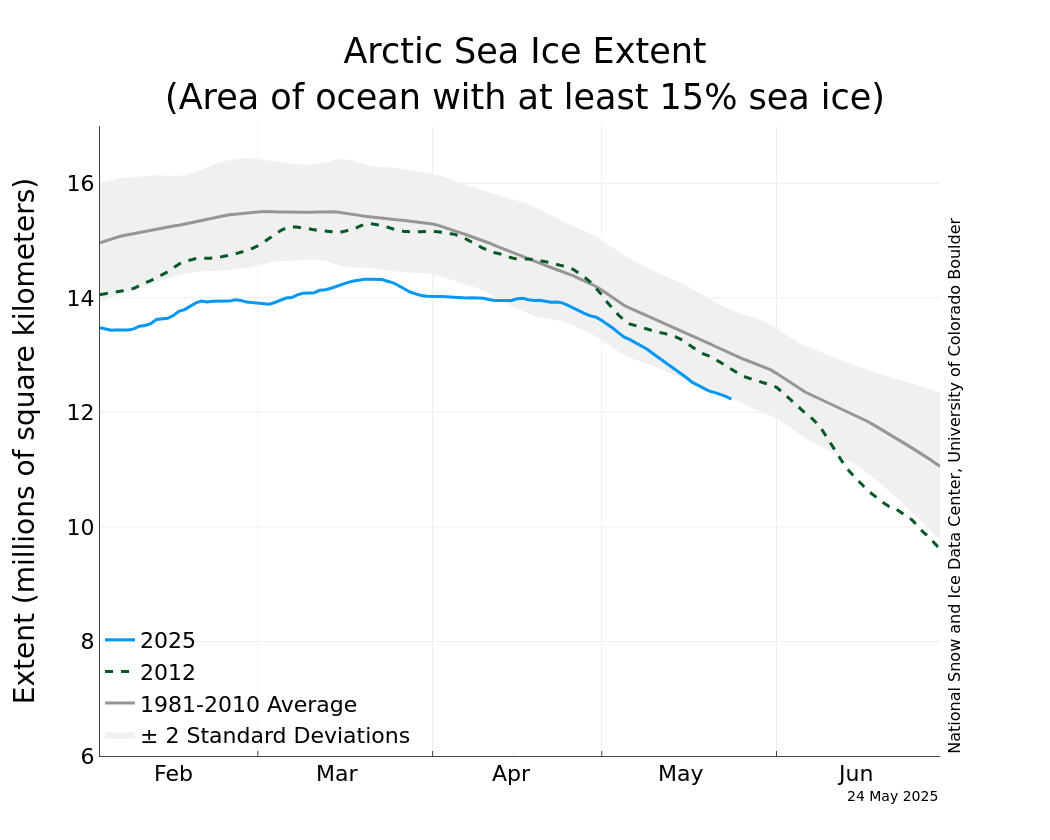
late surge in arctic ice

[click image]

.
Hooray! This totally rocks. It's very weird. It's stupidly LATE, but, well, I'm not going to bitch about being cold anymore this year, that's for damn sure! How many polar bears are going to LIVE because of this? !!! OMG !!! and think of all the extra protection against a catastrophic methane release this might mean. Holy shit!

I'm stoked.
.

01 April 2010

one small, probably short, victory for the constitution

[click image]

.
Another great Peter B podcast, interviewing the attorney who just won a case against the NSA, and a man who has written a book about a murder as old as I am.
.

26 February 2010

profoundly encouraging news

[click image]

.
Lifted a couple of tons off right away....
.

09 February 2010

holy mother of vishnu! some GOOD news!

[click image, crank it up, and bless our BB2!]

.
India refuses genetically modified crops, citing ‘inadequate’ science
Agence France-Presse
Tuesday, February 9th, 2010 — 10:45 pm

India refused to grant permission Wednesday for the commercial cultivation of its first genetically modified (GM) food crop, citing problems of public trust and "inadequate" science.

Environment Minister Jairam Ramesh said he was imposing a moratorium on the introduction of an aubergine modified with a gene toxic to pests that regularly devastate crops across India.

"It is my duty to adopt a cautious, precautionary, principle-based approach and impose a moratorium on the release," until scientific tests can guarantee the safety of the product, said Ramesh.

However, he added there was still no agreement among scientists on what constitutes "an adequate protocol of tests".

Ramesh said the moratorium was effective immediately and it would last "for as long as it is needed to establish public trust and confidence."

"I cannot go against science but in this case science is inadequate," he added. "I have to be sensitive to public concerns."

Indian regulators had approved the new aubergine back in October and its introduction would have made it the first GM foodstuff to be grown in India.

But the decision roused huge opposition and a broad spectrum of voices, including farmers, environmentalists and politicians of all stripes had urged the government to prevent its cultivation.

Ramesh spent the months since the decision travelling across the country holding public consultations with citizens.

Backers of the genetically modified aubergine said the product would boost yields by up to 50 percent, while reducing dependence on pesticides.

But critics pointed to possible long-term health problems, and warned it would open the doors to a flood of other GM food crops.

Mathura Rai, the Indian scientist who led the group that came up with the modified aubergine, declined to comment directly on the moratorium, but insisted that GM crops had a crucial role to play.

"We need a technology for increasing the quality production of vegetable crops," Rai, head of the Indian Institute of Vegetable Research, told AFP from his headquarters in Varanasi city.

"In certain areas where traditional methods of breeding is not possible to improve the production or productivity, biotechnology can play a vital role," he said.

"So this is the best option for increasing the production of quality aubergine in the country," he added.

The government's decision on Tuesday came at a sensitive time with growing public frustration over soaring food prices, following a particularly poor 2009 monsoon.

But Ramesh said there was "no overriding food security argument" for the introduction of GM aubergines.

He said he had considered the views of different interest groups in making his decision but denied he had been pressured by members of his cabinet or by companies producing genetically modified crops.

"My conscience is clear. This is my decision and my decision alone," he said.

India is one of the largest aubergine producers globally.

The seeds had been developed by local scientists but would have been marketed by an Indian company partly owned by the US multinational Monsanto.

India already allows the use of genetically modified cotton and supporters say it has sharply improved yields.
Of course, uhm... this probably means war.........
.

14 January 2010

romance

[click image]

.
At least all the blizzards in Europe this year seem to be lessening Knut's misery, along with his new girlfriend. This qualifies as semi-good news, if not exactly relief for all the travesties in progress.

Whenever you want to see a slide show on RIA Novosti, you just keep clicking the images.

I updated the post below about Ray taking Helen to see Avatar... in case you want to keep up with that....
.

06 December 2009

04 September 2009

maybe


[click image]
Antibodies found that prevent HIV from causing severe AIDS
Scientists were able to isolate two antibodies responsible for resistance to the disease in an African patient. The discovery could be key to the development of a vaccine.

By Thomas H. Maugh II
September 4, 2009

After nearly two decades of futile searching for a vaccine against the AIDS virus, researchers are reporting the tantalizing discovery of antibodies that can prevent the virus from multiplying in the body and producing severe disease.

They do not have a vaccine yet, but they may well have a road map toward the production of one.

A team based at the Scripps Research Institute in La Jolla reports today in the journal Science that they have isolated two so-called broadly neutralizing antibodies that can block the action of many strains of HIV, the virus responsible for AIDS.

Crucial to the discovery is the fact that the antibodies target a portion of HIV that researchers had not considered in their search for a vaccine. Moreover, the target is a relatively stable portion of the virus that does not participate in the extensive mutations that have made HIV able to escape from antiviral drugs and previous experimental vaccines.

"This is opening up a whole new area of science," said Dr. Seth F. Berkley, president and chief executive of the International AIDS Vaccine Initiative, which funded and coordinated the research.

At least 33 million people worldwide are infected with HIV, and at least 25 million have died from AIDS, according to the World Health Organization. Two large trials of experimental vaccines have failed -- the most recent, in 2007, because the vaccine apparently made people more susceptible to infection.

To find the neutralizing antibodies, researchers collected blood samples from more than 1,800 people in Thailand, Australia and Africa who had been infected with HIV for at least three years without the infection proceeding to severe disease. Such individuals are most likely to produce antibodies that interfere with the replication of the virus.

Researchers at Monogram Biosciences in South San Francisco studied the samples most resistant to infection, then a team from Theraclone Sciences in Seattle isolated the antibodies responsible for the resistance.

They ultimately isolated two antibodies, called PG9 and PG16, from one African patient. The antibodies were able to block the activity of about three-quarters of the 162 separate strains of HIV they tested it against.

Immunologist Dennis Burton of Scripps and his colleagues then showed that the antibodies bind to regions of two proteins on the surface of the virus, called gp120 and gp41, that help the virus invade cells. These regions had never before been considered as targets for vaccines.

Researchers still have a long way to go to produce a vaccine, however.

The antibodies themselves could potentially be used as a treatment for infected patients who develop severe disease.

But the long-term hope is to find molecules, either synthetic or natural, that can stimulate the body to produce the broadly neutralizing antibodies. Such molecules could potentially be the basis for a successful vaccine.

29 July 2009

oh, no, wait! this is too wonderful

[click image... spreading some joy for Danny]
Russia and Iran Join Hands
By Kaveh L Afrasiabi

July 28, 2009 "Asia Times" -- The United States may think of Russia as a strategic partner when it comes to Iran. In reality, the geostrategic tensions between Washington and Moscow are still powerful enough to warrant a common approach by Russia and its eastern neighbor Iran with respect to a deterrent strategy towards the intrusive Western superpower.

This week, a small but significant clue is on full display with joint Russia-Iran military exercises in the Caspian Sea involving some 30 vessels. This is partially disguised by a benign environmental cause.

The maneuver, dubbed "Regional Collaboration for a Secure and Clean Caspian", combines security and maritime objectives in the Caspian Sea, the world's largest lake and also a main energy hub that is now the scene of competing alternatives for energy transfer. It signals a new trend in Iran-Russia military cooperation that will most likely increase in the near and intermediate future in light of Iran's observer status at the Shanghai Cooperation Organization. The continuing standoff over Iran's nuclear program should affect this warming of relations.

Iran's willingness to join this exercise represents a complete about-face from seven years ago. In May 2002, Tehran reacted sharply to a Russian military exercise in the Caspian - held in the aftermath of a failed summit on the issue - by refusing to even send a military observer to the maneuver.

Despite all the ups and downs of Iran-Russia relations since then, the weight of geopolitical and geo-economic considerations on both countries has increasingly switched towards greater cooperation, much to the chagrin of Washington, which is keen on isolating "nuclearizing Iran".

At a time when Russia feels undermined by US-backed pipeline projects in the region, as well as dismayed by the absence of any compromise by the Barack Obama administration on its planned installation of an anti-missile shield in Eastern Europe, Moscow's intention to upgrade its military connections with Tehran is calculated. The signal to Washington is that Russia does not tolerate any direct or indirect "regime change" scenario with respect to Iran, a major pillar of anti-US sentiment in the region.

The two-day military exercises are being closely watched by the region's other littoral states - Azerbaijan, Turkmenistan and Kazakhstan - as well as neighboring states in the Caucasus and Central Asia, some of which are aligned with the West and are wary of a new level of Russia-Iran military ties.

Should Russia make good on its promise to put into operation the much-delayed Bushehr power plant that it is building in Iran, a good deal of present Iranian misgivings about Russia will disappear. After all, Russia is Iran's sole nuclear partner and Russian President Dmitry Medvedev openly rebuffed Obama's attempt, in his recent Moscow visit, to link a new arms limitation treaty with the issue of new sanctions on Iran.

Not surprisingly, on the eve of the Russia-Iran military exercise, US Secretary of State Hillary Clinton expressed the US's toughening approach toward Iran, by stating categorically that the US was opposed to Iran's possession of a "full enrichment" program, even though this is allowed under the articles of the nuclear Non-Proliferation Treaty to which Iran is a signatory. Clinton's statement on Sunday is in sharp contrast with Obama's statement during his tour of Prague, when he hinted that the US was willing to accept Iran's enrichment program as long as it was fully monitored by the United Nations' atomic watchdog, the International Atomic Energy Agency.

A widening gap between Moscow and Washington over Iran is indisputable and will likely impact the Obama administration's plans for tough new sanctions later this year. Tehran has already been slapped with several rounds of UN sanctions, as well as those imposed unilaterally by the US over its nuclear program.

United States Defense Secretary Robert Gates, visiting Israel this week, told his hosts that he would remain "hopeful" about the administration's engagement with Iran for the next few months, hinting about an emerging deadline for the "engagement" that has unnerved Israel and some moderate Arab states as well.

Compared with the hypothetical US-Iran engagement, relations between Russia and Iran are progressing toward a honeymoon born of geostrategic considerations. The joint maneuver in the Caspian may prove a starting point for more comprehensive military collaboration between the Russian and Iranian navies, particularly if Moscow sets aside its previous refusal to allow new Iranian naval vessels to enter the Caspian through the Volga channel.

Russia's Caspian neighbors - above all Azerbaijan - may not like it, given the dispute between Tehran and Baku over a Caspian oil field. Still, the imperative of closer Russia-Iran cooperation to fend off Western influence dictates the need to beef up Iran's naval presence in the Caspian.

An important question deals with the possible ramifications of closer Russia-Iran military cooperation on the stalemate over the ownership of the Caspian Sea. Most of the Caspian is already portioned out by bilateral and trilateral agreements, involving Russia, Azerbaijan and Kazakhstan. Iran remains unhappy over Russia's lack of cooperation on this matter. This has been somewhat compensated by both countries agreeing on the common use of Caspian surface water, going back to the 1921 Iran-Russia friendship agreement. The earlier pact is the legal foundation for today's naval cooperation between the two countries.

Meanwhile, the predominant sentiment in Iran is that Moscow must make some concessions to Iran on the thorny issue of the Caspian's legal authority in order to gain Tehran's full confidence. Even Iranian officials in charge of Caspian affairs are unclear about what exactly Russia can do about a situation that is partially controlled by the other Caspian littoral states.

Blaming Russia for the stalemate over Caspian legal rights is a favorite pastime of some of Iran's reformists, who despise Moscow's early embrace of President Mahmud Ahmadinejad after the June 12 presidential elections. Such criticisms must be tempered by a cold calculation of Russia's limits of influence on the other Caspian states which have carved up the inland sea among themselves.

Another question raised by the maneuvers pertains to the Persian Gulf, considered a de facto "American lake", where France has entered the scene via a deal with the United Arab Emirates for a permanent military base. Iran's weak response to France's arrival, inexcusable by Iran's foreign policy standards, may be balanced by similar Iran-Russia military exercise in the Persian Gulf.

As such, the Caspian joint maneuver may well turn out to be the harbinger of a broader agenda that includes the concept of a gas cartel.

This so intensely ROCKS! It's going to make those murderating fucks, cruising for WWIII, think a little harder.

17 June 2009

this just doesn't stop rocking

[click image]

It is such incredibly good news. Maybe even better than the eye transplant thing in Minority Report....